
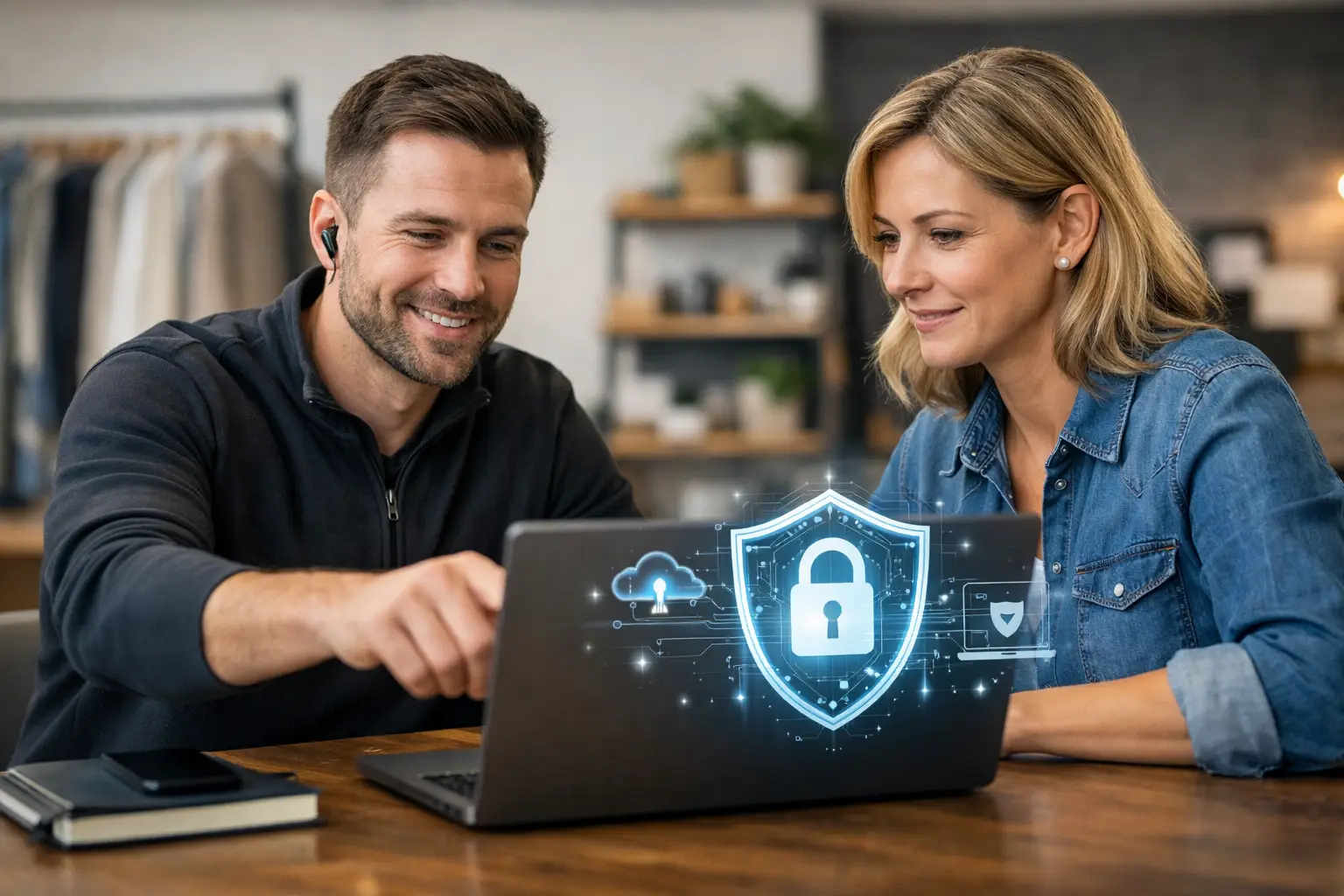
A single suspicious email can interrupt an entire workday. A staff member clicks a convincing invoice, passwords are exposed, and suddenly a small team is trying to determine whether client files, payroll data, or email accounts are at risk. Cybersecurity support for small business is not about creating fear around every message or device. It is about putting dependable protection, clear procedures, and responsive help in place before a routine mistake becomes a business interruption.
For growing companies, security is closely tied to productivity and trust. Accounting firms hold sensitive financial records. Agencies manage client logins and campaign data. Preschools and education-related organizations handle family information. When access is lost or data is exposed, the cost is measured in more than technical cleanup. It can mean missed deadlines, lost revenue, reputational damage, and difficult conversations with clients.
What Cybersecurity Support for Small Business Should Deliver
Effective security support should make technology easier to operate, not harder. The goal is to reduce risk without forcing employees to work around complicated rules or wait too long for help. That calls for a partner that understands how your people use email, cloud applications, shared files, mobile devices, and line-of-business systems.
The strongest approach combines prevention, visibility, recovery, and guidance. Prevention limits common entry points for attackers. Visibility helps identify unusual activity before it spreads. Recovery ensures the business can continue if an incident does occur. Guidance keeps security decisions aligned with your operations, budget, and growth plans.
A one-time security setup is rarely enough. New employees join, devices change, software updates introduce new settings, and cybercriminals adjust their tactics. Ongoing oversight is what turns a collection of security tools into a working security program.
Protect identities before attackers reach your data
Most small business attacks begin with identity. A stolen password can give an attacker access to email, cloud storage, financial systems, and customer communications without needing to break through a firewall. That is why strong password practices and multi-factor authentication should be foundational.
Multi-factor authentication adds a second check when someone signs in, such as an approval prompt or authentication code. It is not foolproof, but it greatly reduces the chance that a compromised password alone will lead to account takeover. The right setup also considers convenience. Employees who travel, use shared devices, or work from home may need different sign-in policies than a team working from one office.
Security support should also review who has access to what. Former employees, temporary contractors, and users with unnecessary administrative permissions can create avoidable exposure. Regular access reviews help ensure people can do their jobs without holding more access than they need.
Treat email as a business-critical security system
Email remains one of the most common paths into small businesses because attackers understand how busy teams work. Fraudulent invoices, fake document-sharing notices, urgent payroll requests, and impersonated executives are designed to create urgency. The message does not need to be perfect to succeed. It only needs to reach one person at the wrong moment.
Email filtering, phishing protection, and domain controls can block many harmful messages before they reach an inbox. However, technology alone cannot catch every threat. Employees need practical awareness training that uses relevant examples and explains what to do when something looks wrong.
Training works best when it is ongoing and respectful. The purpose is not to blame employees for clicking. It is to give them confidence to pause, report suspicious messages, and ask for help. A fast, supportive response encourages reporting early, which is exactly when a potential incident is easiest to contain.
Build Layers That Match Your Actual Risks
Small businesses do not need enterprise-sized complexity to improve their security. They do need a set of coordinated controls that protect the systems they rely on every day. The right mix depends on your industry, compliance obligations, remote-work model, and the sensitivity of the information you handle.
A practical baseline usually includes these connected protections:
- Managed endpoint protection for laptops, desktops, and servers, with monitoring for suspicious activity and missing security updates.
- Secure email controls, multi-factor authentication, and sensible identity policies for Microsoft 365 and other cloud applications.
- Reliable backups that are monitored, protected from unauthorized changes, and tested for recovery.
- Network security that separates critical systems where appropriate and keeps firewalls, wireless access, and remote connections properly managed.
- A documented response process so your team knows who to contact, what to preserve, and how operations will continue during an incident.
The value comes from coordination. For example, endpoint monitoring may identify a malicious file, while identity controls prevent it from being used to sign into cloud services. Backups provide a recovery option if encryption or deletion occurs. Without that layered approach, one missed update or employee mistake can have a much larger impact.
Backups are a recovery plan, not a checkbox
Many business leaders assume that files stored in the cloud are automatically protected against every type of loss. Cloud platforms offer valuable availability and security features, but deleted files, ransomware encryption, sync errors, or compromised accounts can still affect business data. Backup planning should account for those real-world scenarios.
A useful backup strategy answers practical questions. Which data is essential to restore first? How long can each system be unavailable? Who can authorize a recovery? Has the restoration process been tested recently? A backup that has never been tested is an assumption, not a plan.
There are trade-offs. More frequent backups and faster restoration targets may cost more, especially for large volumes of data. For a business that depends on rapid access to client records, that expense may be justified. For less critical archived information, a different recovery target may be reasonable. The key is making those choices deliberately rather than discovering the limits during an outage.
Monitoring turns security from reactive to proactive
Small teams rarely have someone available to watch alerts, investigate unusual sign-ins, verify software updates, and respond to device issues throughout the day. That gap is where managed cybersecurity support can make a meaningful difference.
Proactive monitoring helps identify warning signs such as failed login attempts, unapproved software, inactive security tools, or devices that have missed critical updates. Not every alert indicates an attack. A good support team investigates in context, prioritizes what matters, and communicates clearly about the action being taken.
This is also where responsive helpdesk support matters. If an employee thinks they entered credentials on a suspicious website, they should have a clear way to reach someone quickly. Fast password resets, session reviews, and account protections can limit exposure. Waiting until the next scheduled IT visit is rarely the right response.
Put People and Process Alongside Technology
Security tools cannot replace sound operating habits. Clear onboarding and offboarding procedures, approval processes for payments, device-use expectations, and incident reporting all reduce risk. These processes should be simple enough that people follow them when work is busy.
Consider payment fraud. A well-crafted email may appear to come from a vendor or company executive and request a banking change or urgent wire transfer. A policy requiring independent confirmation through a known phone number can stop that fraud even if the email looks authentic. That is a process control, not a software feature, but it can protect significant funds.
The same principle applies to employee departures. Access should be removed promptly, company data should stay in approved systems, and devices should be returned or wiped according to a defined process. When these steps depend on someone remembering them each time, gaps are likely. When they are built into operations, security becomes more consistent.
When Managed Cybersecurity Support Makes Sense
An internal employee may be able to manage basic technology needs, particularly in a very small office with limited systems. But security requires ongoing attention across devices, users, cloud platforms, backups, vendors, and changing threats. As a business grows, relying on a single person who is already handling operations or finance can create both workload and coverage risks.
A managed IT partner can provide broader expertise and continuity without requiring a full internal IT department. The right partner should explain risks in business terms, document your environment, respond when issues arise, and make recommendations based on priorities rather than selling unnecessary tools. Powerful Platform approaches this work as an ongoing technology partnership, combining proactive management with practical guidance for businesses that need dependable support as they scale.
Before choosing support, ask how security alerts are handled, how quickly urgent issues are escalated, whether backups are tested, and how recommendations are prioritized. Also ask what is included in the service and what requires separate work. Clear accountability matters as much as the technology itself.
Security is not a project you complete and set aside. It is part of protecting your ability to serve clients, pay employees, and keep growing with confidence. The most useful next step is often a clear review of where your business is exposed, followed by a realistic plan that gives your team fewer worries and a trusted place to turn when something does not look right.

Leave a Reply